
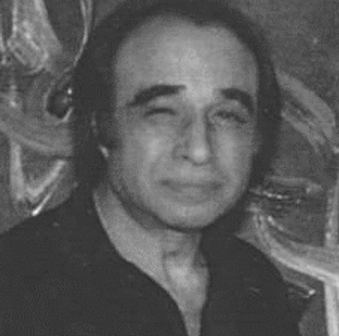
Ismail Gulgee (1926–2007) was a pioneering Pakistani artist celebrated for his mastery in portraiture, abstract painting, and sculpture. Born in Karimpura, Peshawar, he initially pursued engineering, earning degrees from Aligarh University and later studying at Columbia and Harvard Universities. Although academically trained as an engineer, Gulgee’s true passion was art, which he began exploring during his years in the United States. Entirely self-taught, he developed a distinctive style that evolved from realistic portraiture — with commissions from dignitaries including the Afghan royal family — to dynamic abstraction inspired by Islamic calligraphy. By the 1960s, Gulgee had become a leading figure in modern Pakistani art, blending calligraphic forms with the gestural freedom of abstract expressionism. His works often incorporated materials such as gold and silver leaf, mirror glass, and textured paint, creating a sense of spiritual rhythm and luminosity. Alongside painting, he produced monumental bronze sculptures based on Arabic script, merging spirituality with modern form. Over his lifetime, Gulgee received numerous national honors, including the Pride of Performance (1970), Sitara-e-Imtiaz (1982), and Hilal-e-Imtiaz (1995), recognizing his artistic excellence. Tragically, he and his wife, Zareen, were found murdered in their Karachi home in 2007, a loss deeply mourned across Pakistan and the global art world. Today, Ismail Gulgee is remembered as one of Pakistan’s greatest modern artists — a visionary who bridged traditional Islamic aesthetics with the boldness of contemporary abstraction, leaving behind a legacy that continues to inspire artists worldwide.